









Hemp has three separate stories moving at once right now, and any honest market report has to track all three together. As a result of increased production, retail distribution, and consumer familiarity, the sector no longer qualifies as experimental. A category that started out as a small collection of novel cannabinoids has grown into a diverse line of products that includes smokable flower, infused extracts, and wellness products. Exhale Wellness sits inside that broader landscape, a useful marker of how far the category has come from its rougher, less structured beginnings. This report follows the three forces behind that shift. Growth data shows where demand is actually concentrating. Regulatory activity shows which parts of the market remain unsettled. Forecasted trajectory ties both threads together to sketch what companies in this space are likely to run into next.
- Market growth signals
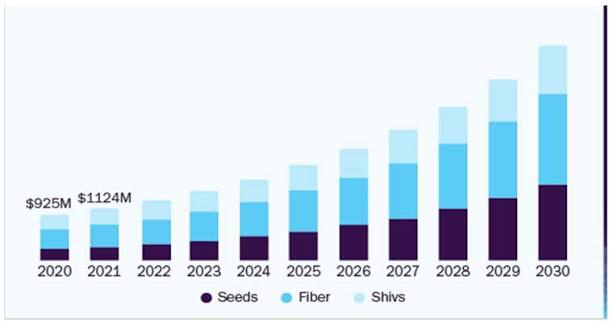
Growth doesn’t move in one direction across the hemp sector, and that split says something on its own. The demand for some segments has been steady, while other segments spiked hard, then cooled into a smaller, more sustainable level. According to the unevenness, the market is still discovering which products will stick around and which ride a wave of early curiosity. Wellness-oriented hemp products have held the steadiest year-over-year demand, helped along by consumers who are more familiar with the category now. Novel cannabinoid products tend to follow a different pattern entirely, jumping fast out of the gate before levelling off once the initial interest wears thin. Retail expansion has also outpaced manufacturing in a handful of regions, leaving temporary supply gaps whenever demand peaks. Companies paying close attention to these swings have generally rebuilt production planning around them, rather than betting that early demand curves would hold steady indefinitely.
- Shifting regulatory terrain
Rules shift from state to state often enough that regulation remains the hardest part of this industry to predict. Hemp-derived products fall under general federal guidelines, but their legal frameworks differ depending on the state, resulting in a patchwork of restrictions. It goes beyond compliance paperwork to cause inconsistency. There are often differences between brands that sell in multiple states, including formulations, labels, and distribution plans, to meet regional laws that don’t apply to other states. In general, companies with flexible compliance systems have been able to deal with new regulations without a great deal of disruption, while those with a national approach have been affected more by sudden changes in local rules.
- Forecasted market trajectory
Forecasting here means weighing both where consumer demand is heading and where regulation is still catching up. Most analysts expect wellness-focused hemp products to keep growing, since that demand has proven sturdier than anything driven mainly by novelty. Regulatory clarity, whenever it fully arrives, is expected to tighten the field somewhat, favouring companies that already have testing and compliance systems built out over newer entrants still catching up. Supply chains are also expected to mature as extraction and manufacturing capacity catch up with several years of compressed demand, easing the production gaps that have shown up on and off across multiple product lines.
Despite uneven growth patterns, inconsistent regulation, and shifting consumer demands, the hemp industry has grown from a narrow early-stage segment into a structurally complex market with shifting consumer demands. In order to remain stable as the market moves toward greater regulatory clarity and more predictable growth, companies that have adjusted their production, compliance, and distribution practices must adapt as well.