








Hot work is one of the most underestimated fire risks in commercial and industrial settings. Sparks from welding, cutting, or grinding can travel up to 35 feet and remain capable of igniting combustible materials for minutes after landing—long after a worker has moved on. That sustained ignition risk is why fire safety codes across the United States mandate trained oversight during and after every hot work operation. For site managers and contractors already searching for fire watch guards near me, the urgency is real and the regulatory framework is clear.
The Scale of Hot Work-Related Fires
The NFPA estimates that hot work is a contributing factor in thousands of structure fires each year, causing hundreds of millions of dollars in property losses annually. These aren’t fringe statistics—hot work consistently ranks among the top causes of fire in commercial buildings, industrial facilities, and construction sites.
What makes hot work particularly dangerous is the delay between ignition and visible fire. Embers can smolder inside wall cavities, insulation, or behind equipment for 30 to 60 minutes before flames appear. By that point, a fire that could have been extinguished in seconds has the potential to compromise an entire structure.
OSHA’s Requirements for Hot Work Fire Watch
OSHA’s construction standard, 29 CFR 1926.352, establishes clear requirements for fire watch during hot work operations. A trained fire watch must be present whenever welding or cutting takes place near combustible materials that cannot be removed or shielded. The fire watch must remain on-site for a minimum of 30 minutes after hot work concludes.
Additionally, OSHA requires that fire watch personnel be equipped with appropriate fire extinguishing equipment and trained in its use. They must also be capable of summoning emergency services immediately if conditions escalate beyond what can be controlled with available equipment.
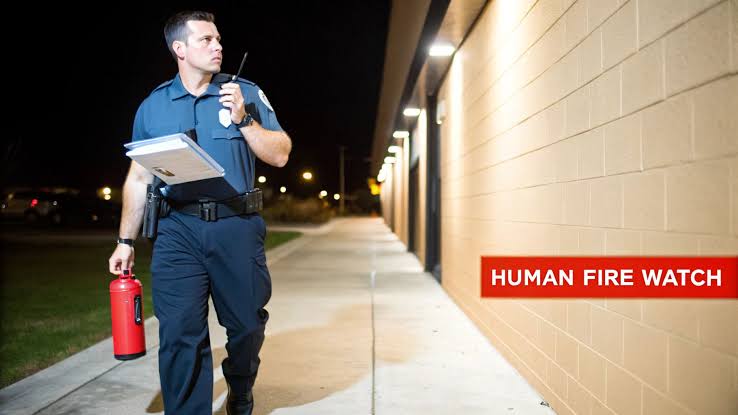
What a Qualified Hot Work Fire Watch Guard Does
A fire watch guard assigned to a hot work site performs a specific, structured set of tasks:
Pre-work inspection: Identifying combustible materials within the work radius and ensuring they are removed or protected
Active monitoring: Observing sparks, heat, and smoke throughout the duration of hot work activity
Post-work patrol: Conducting systematic checks of the area for a full 30 to 60 minutes after work ends
Documentation: Maintaining written logs that record patrol times, observations, and any incidents
These responsibilities require training, attention to detail, and situational awareness that goes well beyond what a standard security guard provides.
Industries Where Hot Work Fire Watch Is Most Critical
Hot work hazards exist across a wide range of sectors:
Shipbuilding and marine repair, where confined spaces amplify risk
Oil and gas facilities, where flammable vapors can accumulate without warning
Manufacturing plants, especially those handling wood, textiles, or chemical products
Construction sites, where new framing and temporary materials create significant fuel loads
Commercial renovations, particularly in occupied buildings where evacuation logistics add complexity
Each environment carries unique hazards, which is why fire watch guards with industry-specific experience deliver better outcomes than generalist assignments.
How to Prepare Your Site Before Hot Work Begins
Before any torch is lit or grinder is switched on, a proper hot work permit system should be in place. Most fire codes and insurance carriers require a written permit that identifies the work area, lists combustible hazards, confirms protective measures, and names the designated fire watch personnel.
The fire watch guard should review the permit, walk the site, and confirm that all required safety measures are in place before work begins. This pre-task alignment is a simple step that significantly reduces the likelihood of an incident.
The Value of Getting It Right
Hot work fire watch isn’t a bureaucratic checkbox—it’s a practical safeguard that directly reduces the probability of a costly, dangerous, and potentially fatal fire. The investment in qualified personnel during hot work operations is one of the most defensible risk management decisions a contractor or facility manager can make. When you match the right guard to the right environment, the protection delivered is immediate and measurable.